PMP Exam 2026: What Changed and What Candidates Need to Know
The PMP exam changed in July 2026. Here is what changed in the domain weights, exam focus, question experience, eligibility, and how candidates should adapt their preparation.
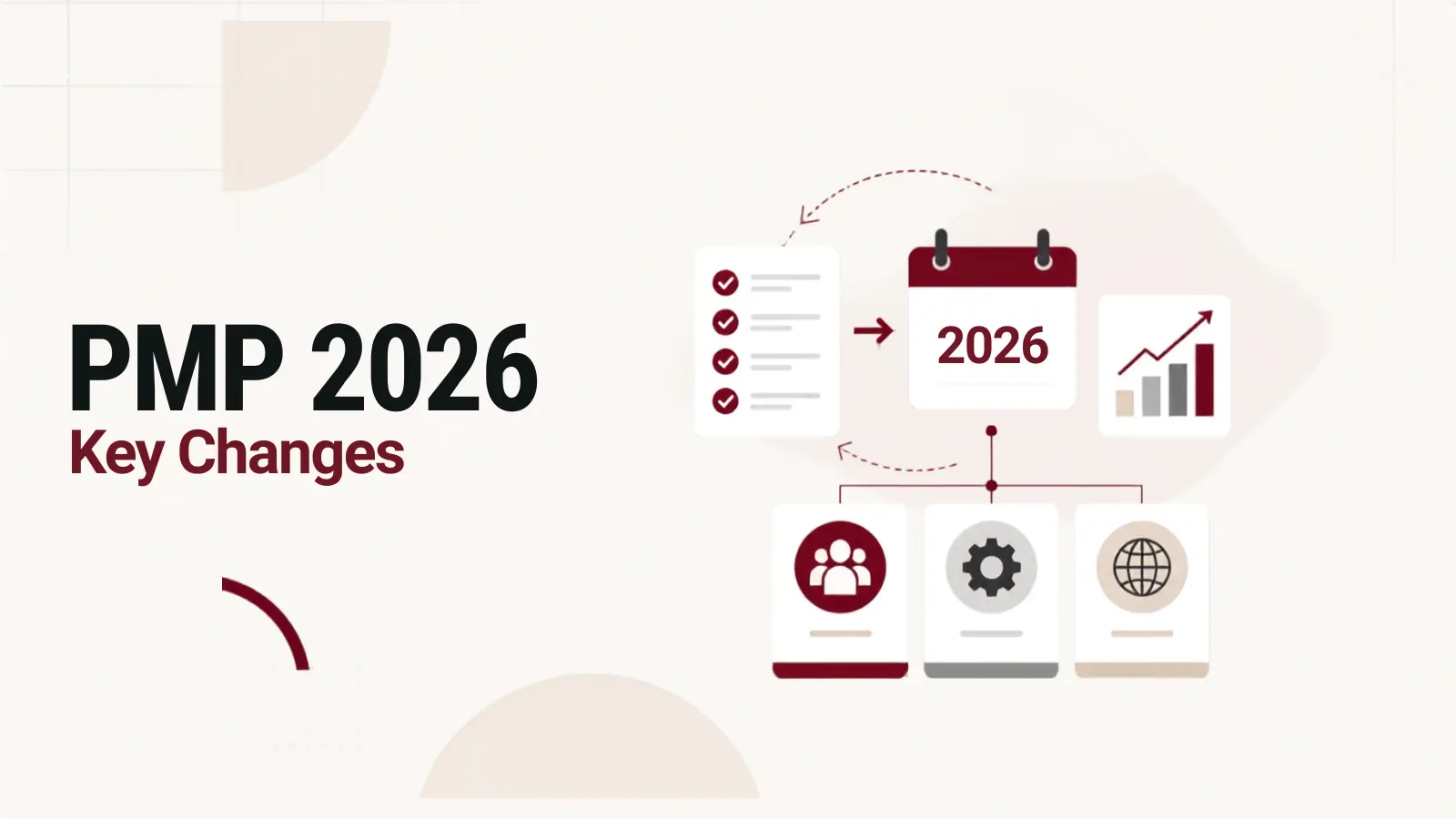
The updated Project Management Professional (PMP)® exam launched in July 2026. For candidates preparing now, the change is significant, but it does not mean everything you previously learned is obsolete.
PMI has kept the core project management principles and approaches that candidates already know. What has changed is the emphasis. The exam now places more weight on business context, value delivery, stakeholder alignment, adaptive decision-making, and the realities of modern project environments, including artificial intelligence and sustainability.
If you are preparing for the PMP exam in 2026, the most important step is to understand what PMI now expects you to demonstrate, rather than simply adding a few new topics to an old study plan.
The 2026 PMP exam is already live
PMI launched the updated PMP exam on July 9, 2026.
The new Examination Content Outline (ECO) defines the domains, tasks, enablers, delivery approaches, and exam experience candidates should prepare for.
The exam continues to assess whether a project professional can apply project management judgment in realistic situations. PMI explicitly distinguishes the ECO from the PMBOK® Guide: the exam is not simply a test of whether you can recall material from one book.
Candidates are expected to apply project management concepts and experience to situations that resemble real project work.
1. The domain weights changed significantly
One of the clearest changes is the redistribution of exam content across the three PMP domains.
| Domain | Previous weighting | 2026 weighting |
|---|---|---|
| People | 42% | 33% |
| Process | 50% | 41% |
| Business Environment | 8% | 26% |
The biggest change is Business Environment, which has increased from 8% to 26%.
This is not a minor adjustment.
More than one quarter of the exam is now associated with understanding the broader environment in which projects operate. Candidates need to think beyond delivering scope on time and within budget.
The updated ECO gives greater importance to topics such as:
- project governance;
- compliance;
- organizational change;
- risk and issues;
- finance;
- procurement;
- business value;
- stakeholder expectations;
- alignment between project outcomes and organizational objectives.
For candidates, this means that treating Business Environment as a small final chapter in a study plan is no longer appropriate.
2. The exam puts more emphasis on outcomes and value
PMI's updated framing of project success goes beyond the traditional measures of scope, schedule, and budget.
Those measures still matter, but candidates increasingly need to consider whether the project is creating meaningful value and achieving the intended outcomes.
A PMP question may therefore ask you to choose between several actions that are all technically possible. The best answer may depend on which action:
- protects or increases stakeholder value;
- supports the intended business outcome;
- aligns with project governance;
- responds appropriately to changing conditions;
- considers the impact beyond the immediate project team.
This is one reason scenario-based preparation matters so much.
The exam is testing judgment, not only recall.
3. AI and sustainability now appear more explicitly
PMI identified artificial intelligence and sustainability as important trends that needed to be reflected in the updated examination.
That does not mean the PMP exam has become an AI certification or a sustainability certification.
Instead, candidates should be prepared to encounter these topics in realistic project situations.
For example, a project manager may need to consider:
- how AI affects project work or decision-making;
- governance around the use of AI-enabled tools;
- risks introduced by new technology;
- stakeholder expectations regarding sustainability;
- regulatory or compliance implications;
- how sustainability considerations affect project decisions and outcomes.
The important skill is still project management judgment.
Candidates should understand how these factors influence decisions rather than memorizing isolated definitions.
4. Predictive, agile, and hybrid approaches remain important
The updated ECO states that approximately 40% of exam items represent predictive approaches.
The remaining 60% is divided between adaptive/agile and hybrid approaches.
PMI does not publish a fixed agile-versus-hybrid split.
These approaches can appear throughout all three domains. They are not confined to one part of the exam.
This has an important consequence for preparation: you should not study predictive, agile, and hybrid project management as three completely separate worlds.
A strong candidate should be able to recognize the environment described in a scenario and determine which type of response is appropriate.
You may need to understand when to:
- follow established change control;
- support team self-organization;
- tailor governance;
- use iterative delivery;
- manage a fixed dependency;
- adapt communication;
- combine predictive constraints with agile delivery practices.
The exam is increasingly about choosing an appropriate response for the context.
5. Business Environment deserves much more study time
Because Business Environment now represents 26% of the exam, candidates should adjust how they allocate study time.
The 2026 ECO includes eight Business Environment tasks covering areas such as:
- project governance;
- compliance;
- change;
- impediments and issues;
- risk;
- finance;
- procurement;
- business value.
This does not mean you should spend exactly 26% of your study hours on this domain. Your study plan should also reflect your strengths and weaknesses.
But it does mean Business Environment should no longer be treated as secondary content.
A candidate who is strong in team leadership and project execution but weak in governance, compliance, finance, procurement, and value delivery may now have a much more significant gap.
6. The exam experience is more scenario-based and interactive
The 2026 PMP exam contains 180 questions, including 170 scored questions and 10 unscored pretest questions.
Candidates have 240 minutes to complete the exam.
PMI describes several question formats, including:
- case or scenario questions;
- enhanced matching;
- graphic-based questions;
- multiple-choice single-response questions;
- multiple-response questions;
- point-and-click items;
- matching;
- pull-down lists.
The updated exam therefore requires more than recognizing the correct statement from four obvious choices.
Candidates may need to interpret information, work through a longer scenario, analyze a visual, or determine the best action from several plausible alternatives.
This makes practice quality especially important.
A useful practice question should not simply test whether you remember a sentence from a study guide. It should make you assess context, distinguish between reasonable alternatives, and decide what a project manager should do in that situation.
7. The exam still contains 180 questions and includes two breaks
The current PMP exam provides 240 minutes for 180 questions.
PMI also provides two 10-minute breaks.
Candidates should therefore prepare not only for the content but also for the mental endurance required to work through a long scenario-driven exam.
Full-length practice remains useful because it helps you develop:
- pacing;
- concentration;
- decision-making under time pressure;
- the ability to move on when a question is uncertain;
- awareness of how much time you are spending on complex scenarios.
Knowing the material and managing the exam are two different skills.
You need both.
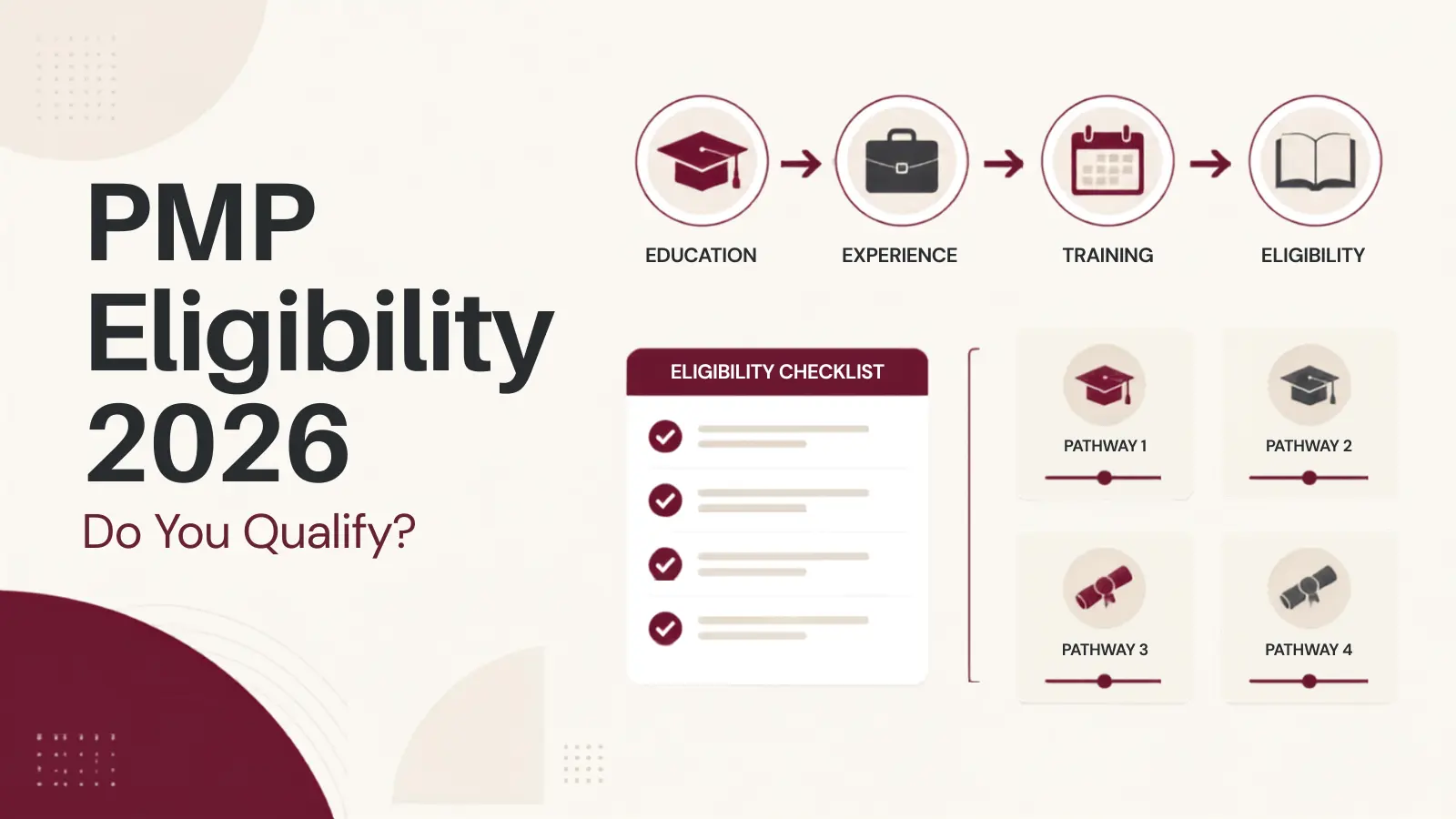
8. Eligibility has also changed
The 2026 update is not limited to exam content.
PMI has expanded eligibility pathways and extended the experience look-back window to 10 years.
This can affect candidates whose qualifying project experience was previously too old to use or whose education and training path did not fit the earlier framework as easily.
Eligibility deserves its own detailed explanation because the requirements depend on your educational background and professional experience.
Before submitting a PMP application, check the current PMI eligibility requirements rather than relying on older articles or videos.
9. Do not confuse the July exam update with the December training change
There is another important 2026 date candidates should know.
Starting December 1, 2026, PMI is changing the rules for certain live PMP training used toward the required 35 training hours.
For live instructor-led training completed under the new rules, eligible providers will include PMI Authorized Training Partners, China Registered Education Providers, and eligible accredited academic programs.
PMI states that self-paced training can still come from other organizations.
Training completed before December 1, 2026 remains eligible under the current requirements.
This is a training-eligibility change, not a second PMP exam-content update.
Candidates should keep the two changes separate:
- July 2026: updated PMP examination;
- December 1, 2026: change to eligibility rules for certain live training hours.
10. PMBOK Guide Eighth Edition matters, but the exam is not a PMBOK memorization test
The PMBOK® Guide remains an important authoritative project management reference.
However, PMI's own ECO explains that the examination and the PMBOK Guide serve different purposes.
The PMBOK Guide provides principles, practices, technical areas, and ways of working. The PMP exam evaluates whether candidates can apply project management thinking to realistic situations.
For preparation, this means you should understand concepts well enough to use them.
For example, it is not enough to know what a stakeholder engagement plan is. You should be able to recognize when stakeholder expectations are becoming misaligned and determine what the project manager should do next.
It is not enough to memorize change-control terminology. You should be able to determine when formal governance is necessary and when a team can adapt within its existing authority.
The same principle applies across predictive, agile, and hybrid environments.
What has not changed?
The 2026 update is substantial, but candidates should not assume that everything learned for the previous PMP exam is now useless.
PMI itself advises candidates who had already started studying that the core principles and approaches remain relevant.
Fundamental project management capabilities still matter:
- leadership;
- communication;
- stakeholder engagement;
- conflict management;
- risk management;
- planning;
- delivery;
- governance;
- adaptation;
- decision-making.
The difference is how these capabilities are weighted and how they are tested.
How should you change your PMP study strategy?
If you are preparing for the current PMP exam, focus on five priorities.
1. Study from the 2026 Examination Content Outline
Use the current ECO as your coverage map. CertOnyx's own PMP exam changes overview breaks down the updated domain weights in more detail if you want a quick reference alongside your study plan.
Make sure your preparation includes all three domains and does not rely entirely on an older topic list.
2. Increase your focus on Business Environment
Governance, compliance, organizational context, finance, procurement, risk, and value are now too important to leave until the end of your study plan.
3. Practice situational decision-making
Ask yourself:
- What is happening?
- What should the project manager assess first?
- Who needs to be involved?
- What governance or authority applies?
- Which response addresses the root problem?
- Which option creates value without bypassing necessary controls?
This is more useful than searching for a single memorized keyword.
4. Prepare across predictive, agile, and hybrid contexts
Do not automatically select an "agile answer" or a "predictive answer."
First determine the project context.
Then choose the response that fits it.
5. Practice with realistic scenarios
Good preparation should expose you to plausible distractors.
On the real exam, several answers may sound reasonable. Your task is to identify the most appropriate response for the situation described.
The key takeaway
The 2026 PMP exam has not abandoned traditional project management.
It has broadened what successful project leadership means.
Candidates still need to understand people, processes, planning, risk, stakeholders, and delivery. But they also need to connect those capabilities to governance, business value, organizational outcomes, modern technology, sustainability, and changing project environments.
The most important preparation shift is therefore not simply:
"Learn more topics."
It is:
"Practice making better project decisions in context."
That is the mindset the updated PMP exam is increasingly designed to assess.
If you want to practice this kind of scenario-based decision-making directly, CertOnyx's PMP certification prep is built around the updated 2026 domain weighting.
Official sources
This article is based primarily on the Project Management Institute's July 2026 PMP Examination Content Outline and PMI's official 2026 PMP exam update guidance. For the most current requirements, always check the PMI PMP certification page directly rather than relying on this or any third-party summary.
CertOnyx is an independent exam-preparation platform and is not affiliated with, endorsed by, or sponsored by the Project Management Institute.